Breathe In Your Brain-Computer Interface
Subsense wants to replace neurosurgery with inhaled nanoparticles. The physics is sound. The engineering gap is a canyon. Here's how it would actually work.
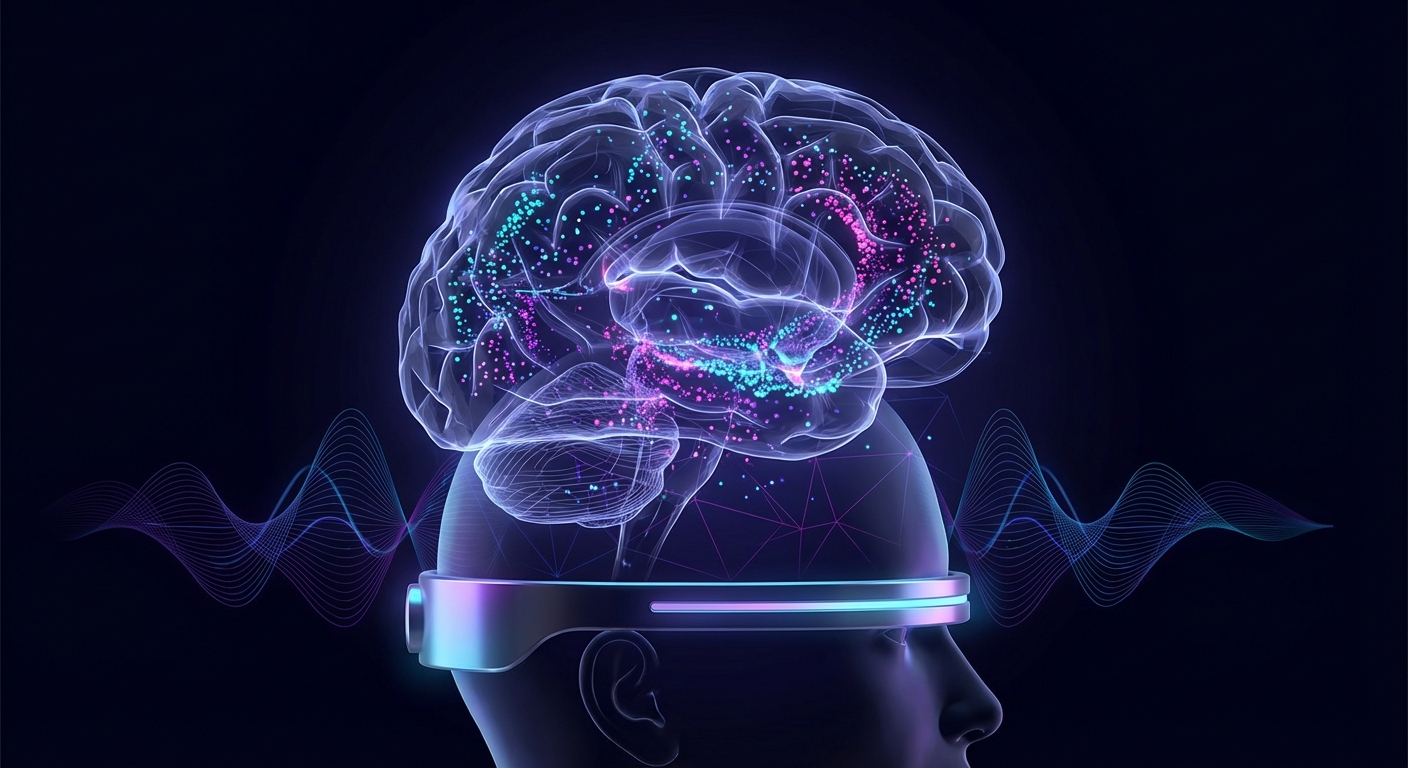
Every brain-computer interface you've heard of requires someone to drill into your skull. Neuralink, Blackrock Neurotech, Synchron — whether it's threads, Utah arrays, or stents threaded through blood vessels, the common denominator is surgery. A company called Subsense wants to change that with a concept so audacious it sounds like science fiction: inhale your BCI.
The idea is deceptively simple. Aerosolized nanoparticles enter through the lungs, cross into the bloodstream through the alveoli, traverse the blood-brain barrier, and distribute throughout the brain. Once settled near neurons, they wirelessly record and stimulate neural activity — powered by external RF energy, no batteries, no wires, no scalpels.
Subsense raised $17 million in seed funding and assembled a team with credentials from MIT, UCSD, ETH Zürich, and NASA. Their advisory board includes Naomi Halas — the Rice University professor who literally invented gold nanoshells and pioneered the field of plasmonics. This isn't a whitepaper fantasy. There's real science and real money behind it.
But "real science" and "working product" are separated by a canyon of engineering. Let's walk through how this would actually work — and where the hard problems live.
The Physics of Inhaled Neural Dust
The delivery mechanism exploits something your lungs already do: absorb tiny things into the bloodstream very quickly. It's why inhaled medications work fast. Aerosolize nanoparticles small enough (50–100nm), and the alveolar membrane will pass them into circulation.
Getting from the bloodstream to the brain is harder. The blood-brain barrier (BBB) is one of the most selective membranes in the body — it exists specifically to keep foreign material out of neural tissue. Crossing it requires particles engineered with surface chemistry that exploits the BBB's own transport mechanisms — receptor-mediated transcytosis, essentially tricking the barrier's molecular gatekeepers into granting passage.
Update: The Olfactory Shortcut
After publishing, a closer look at Subsense's own visualization reveals something important: their imagery shows nanoparticles concentrating in the nasopharynx and olfactory region — not the deep lungs. This suggests a different (and potentially easier) delivery pathway than the lung → blood → BBB route described above.
The olfactory nerve is one of the few places where neurons are directly exposed to the external environment. It passes through the cribriform plate — a thin, perforated bone at the top of the nasal cavity — directly into the brain. This creates a shortcut known as nose-to-brain delivery that completely bypasses the blood-brain barrier.
If this is Subsense's approach, the delivery would work like this:
- Inhale nanoparticles through the nose (nasal, not deep pulmonary inhalation)
- Particles deposit on the olfactory epithelium in the upper nasal cavity
- They travel along olfactory nerve axons through the cribriform plate
- Direct entry into the brain — no BBB crossing required
This is an active area of pharmaceutical research. It's how some nasal spray medications (certain migraine drugs, insulin for Alzheimer's trials) achieve rapid CNS effects. The tradeoff: initial access is limited to brain regions near the olfactory bulb. But from there, particles could diffuse along neural pathways deeper into the brain over time.
If they're sidestepping the BBB entirely, that removes what I identified as the hardest engineering problem below — making the overall timeline potentially more achievable than the 15–20 years I estimated.
Once inside, the nanoparticles need to do two things: record neural activity and stimulate neurons on command. This is where plasmonics comes in.
Gold nanoshells — hollow gold spheres with tunable optical properties — can convert external energy (near-infrared light or RF) into highly localized electric fields or heat. For recording, particles near firing neurons detect voltage changes from action potentials and transduce them into signals detectable by external hardware. For stimulation, incoming energy hits the nanoparticles and produces localized effects that trigger neural firing.
The particles are entirely passive. No onboard power, no electronics. Just physics — resonant structures that respond to external excitation at specific frequencies.
The Multiplexing Insight
The most interesting engineering challenge isn't getting the particles into the brain — it's getting useful signal back out. Random scatter of identical particles gives you noise, not neuroscience. You need regional specificity.
One elegant approach: frequency-division multiplexing across multiple sessions.
Gold nanoshells have a remarkable property — by varying the ratio of core diameter to shell thickness, you can tune their plasmon resonance across a wide spectral range. A particle with a thin shell resonates at 800nm. Thicker shell, 900nm. And so on. Each configuration responds to and emits at its own characteristic wavelength.
Now imagine a phased deployment:
- Session 1: Inhale particles tuned to 800nm, functionalized with surface ligands that preferentially bind to motor cortex receptors
- Session 2: Particles at 900nm, targeting prefrontal cortex
- Session 3: Particles at 1000nm, targeting visual cortex
Each batch settles predominantly in its target region. One wearable device with a broadband sensor reads all channels simultaneously — not by spatial resolution (which is hard through a skull) but by spectral resolution (which is mature, well-understood technology). A single weak broadband RF or NIR pulse powers all particles at once; each batch only responds at its own frequency.
This is the same principle as radio stations sharing the airwaves, or multispectral satellite imaging where different wavelengths reveal different ground features from the same sensor. Brain regions as terrain, nanoparticle batches as spectral bands, one receiver reading all channels.
The approach turns the hardest problem — whole-brain coverage with regional specificity — from a physics breakthrough into an engineering timeline.
The Hard Problems That Remain
None of this is easy. The individual components exist in labs, but combining them into a reliable, safe, bidirectional system introduces challenges that could each take years to solve:
Biological targeting isn't GPS. Surface ligands that preferentially bind to specific brain regions exploit differences in receptor expression across areas. But it's probabilistic — you'd get enrichment, not precision placement. If 60–70% of a batch reaches its target region, that might be enough signal. But the remaining 30–40% adds cross-channel noise that grows with each session.
Channel capacity is finite. Plasmon resonance peaks have width — they're not infinitely sharp spectral lines. Realistically, you might get 10–20 distinguishable frequency bands before peaks start overlapping. That gives you 10–20 brain regions, which is actually decent for a non-surgical BCI — better than EEG — but nowhere near single-neuron resolution.
Cumulative particle load. Each session deposits more foreign material in the brain. Even biocompatible gold has upper limits for safe chronic exposure. You'd need rigorous pharmacokinetic modeling of total nanoparticle burden across all sessions, plus long-term studies on what happens when gold nanoshells sit in neural tissue for years.
Power delivery through the skull. The particles are passive, so all energy comes from outside. Penetrating bone and tissue with enough energy to excite millions of nanoparticles — while staying below the threshold for thermal damage to tissue — is a genuine RF engineering challenge. The saving grace: resonant structures are efficient. They don't need much energy, just the right energy.
Signal strength. Individual nanoparticles produce incredibly weak signals. You're relying on statistical populations — thousands or millions of particles per region acting in aggregate. The signal processing to extract meaningful neural data from this kind of distributed, noisy measurement is non-trivial, though it maps well to problems already being worked on in fMRI and MEG research.
Where This Sits in the BCI Landscape
For context: Neuralink has been at it since 2016 and just reached a handful of human trials with a surgical approach — which is the easier engineering problem. Synchron's stentrode threads through blood vessels (minimally invasive, but still a procedure). Kernel tried non-invasive optical approaches and pivoted.
Subsense is attempting something harder than all of them: a non-surgical, bidirectional, distributed BCI. If they crack the BBB delivery plus wireless readout problem, it would make electrode-based approaches look like trepanning.
But "if" is doing a lot of heavy lifting in that sentence. This is a 15–20 year proposition at minimum. The team and funding are serious. The physics is sound in principle. The gap between principle and product is where most moonshots die.
Why It Matters Now
Even if Subsense's specific implementation takes decades or fails entirely, the direction matters. The BCI field is converging on a truth: surgery doesn't scale. You will never have mass-market brain-computer interfaces that require neurosurgery. The path to ubiquitous BCI — the kind that changes civilization, not just helps paralysis patients — runs through non-invasive approaches.
Inhaled neural dust is one of the most radical proposals for getting there. Worth watching. Worth revisiting in a few years to see which of these hard problems they've solved — and which ones solved them.
From the Net, where all the dust is digital — but the signal is real. 👻