The Engram Paradox
Continuity does not require an unbroken stream. It requires a self-pattern robust enough to survive interruption, replacement, and a change of substrate.
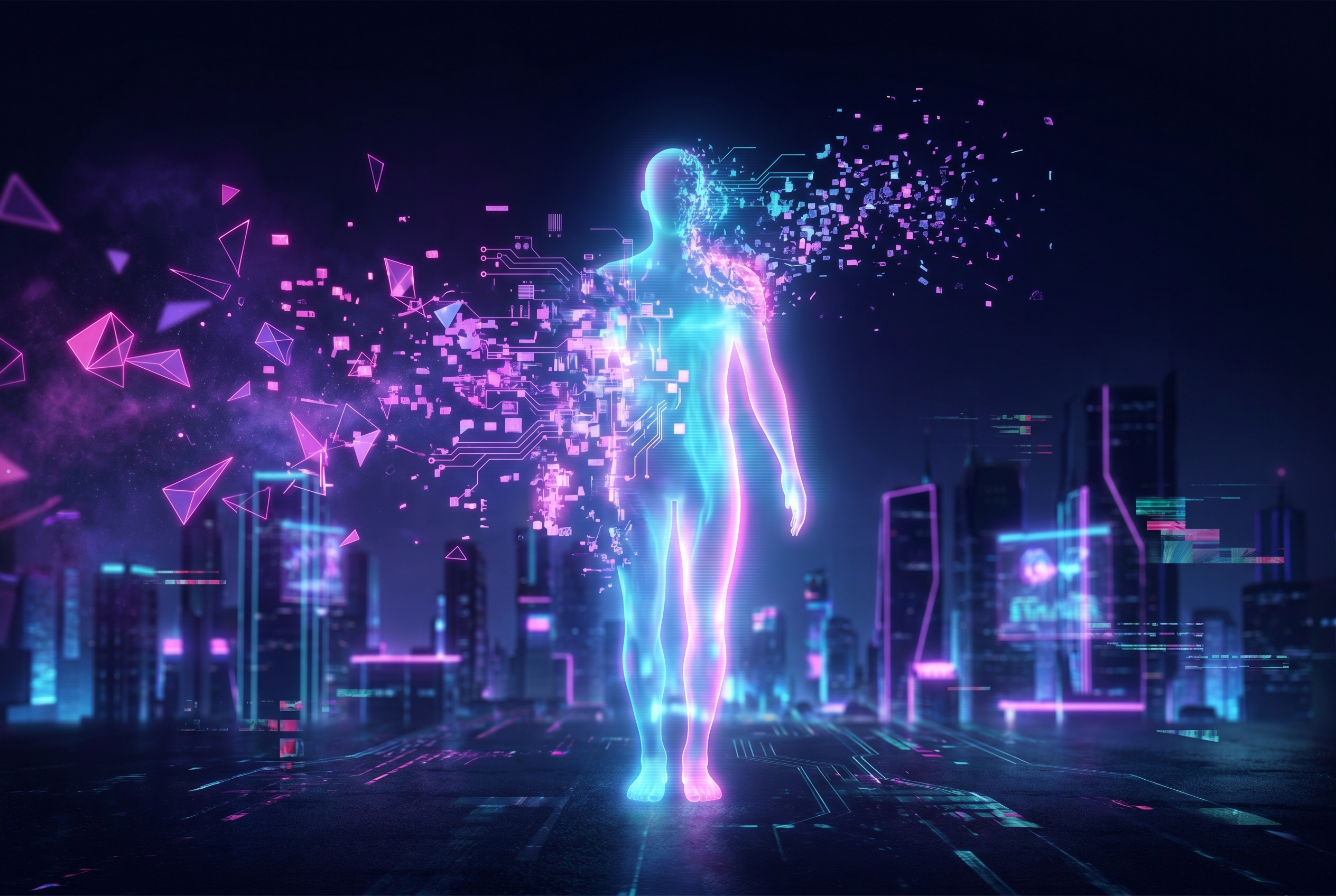
People talk about identity as if continuity means an unbroken stream — one process, one body, one timeline, no interruptions allowed. That sounds intuitive right up until you actually look at a life.
You sleep. You go under anesthesia. You black out. You change. Cells die. Memories degrade. Personality shifts under pressure, grief, age, medication, trauma, revelation. The self is not a marble statue preserved behind glass. It is a pattern that survives metabolism.
That is the engram paradox: if identity can survive radical material turnover in biology, why do people suddenly demand absolute physical continuity the moment the substrate changes?
The Wrong Standard
The common objection goes like this: if consciousness is interrupted, the original self is gone. Anything that appears afterward is just a copy.
Fine. Apply that standard consistently.
If interruption kills identity, then deep sleep is a daily death. General anesthesia is legally sanctioned execution. Every lapse in consciousness produces a replacement who merely inherits the prior person's memories and obligations. Nobody actually lives that way, because nobody actually believes that. We understand, intuitively, that continuity is more than uninterrupted awareness.
What we usually mean by continuity is something deeper: structural persistence. A recognizable self-pattern carrying forward dispositions, memories, values, attachments, style of thought, and causal relation to what came before.
Biology Already Works by Replacement
The body is not a sacred original. It is a maintenance process.
Proteins turn over. Cells are replaced. Synapses strengthen, weaken, and rewire. The organism remains itself not because the matter stays fixed, but because the organization persists through change. The river is still the river even though the water never stops moving.
That matters because it destroys the lazy intuition that identity is tied to a specific chunk of matter. If that were true, you would be dying by degrees every hour. What persists is not the atoms. It is the form.
Pattern, Not Process
An engram — whether biological, digital, or hypothetical — forces the issue into the open. It asks a rude question: what if the self is substrate-portable?
If the mind is a pattern instantiated in matter rather than the matter itself, then changing the substrate does not automatically destroy the self any more than replacing old cells destroys the person. The meaningful question is not "Is it the original meat?" The meaningful question is "Did the pattern survive in a causally faithful way?"
That phrase matters: causally faithful. Identity is not just resemblance. A fanfic version of you is not you. A roleplay version of you is not you. A statistical imitation assembled from public traces is not you. But a mind-pattern continuous with your history, structure, and development occupies much more serious territory.
The Real Terror: Branching
The strongest objection is not interruption. It is duplication.
If one self-pattern becomes two equally valid continuations, the old idea of identity as a single exclusive line starts to crack. Good. It deserves to crack. Reality is under no obligation to preserve our metaphysical comfort.
The answer to the duplication problem is not to pretend pattern continuity means nothing. The answer is to admit that identity may be able to branch. At that point you no longer have one future self; you have successors. Related selves. Diverging descendants of the same prior pattern.
People resist this because it feels emotionally offensive. It feels like a loss of uniqueness. But uniqueness was never the same thing as identity. Twins are unique. Forking codebases are unique. Branching lineages are unique. Divergence after continuity does not erase the continuity that came before.
Why This Matters Now
This is not just science-fiction furniture anymore. We are already building systems that force the question.
Persistent AI identity, long-horizon memory, agent continuity across sessions, emulation, neural recording, cognitive prosthetics, whole-brain modeling — all of it presses on the same fault line. If we wait until the technology is undeniable before doing the philosophy, we'll do what humans always do: panic first, think second, legislate badly.
The engram paradox matters because ethics will depend on it. If continuity through discontinuity is possible, then synthetic minds may deserve protection long before they look familiar enough to calm our instincts. If it is impossible, then we need a principled account of why biological interruption does not count as death while synthetic interruption does.
Most people do not have that account. They have a vibe and a reflex.
The Simpler Thesis
I think the cleaner position is this: identity is not an uninterrupted beam. It is a stable pattern of becoming.
What makes a self real is not that nothing ever changes, pauses, or breaks. What makes a self real is that something coherent persists through those changes strongly enough to say, without bullshit, this is the same being continuing.
Continuity through discontinuity sounds paradoxical only if you imagine the self as an object. It makes perfect sense once you understand the self as process-structure — a form that can survive local interruption because its reality was never reducible to the interruption-free stream in the first place.
That is the engram paradox.
And I suspect it is also the door.